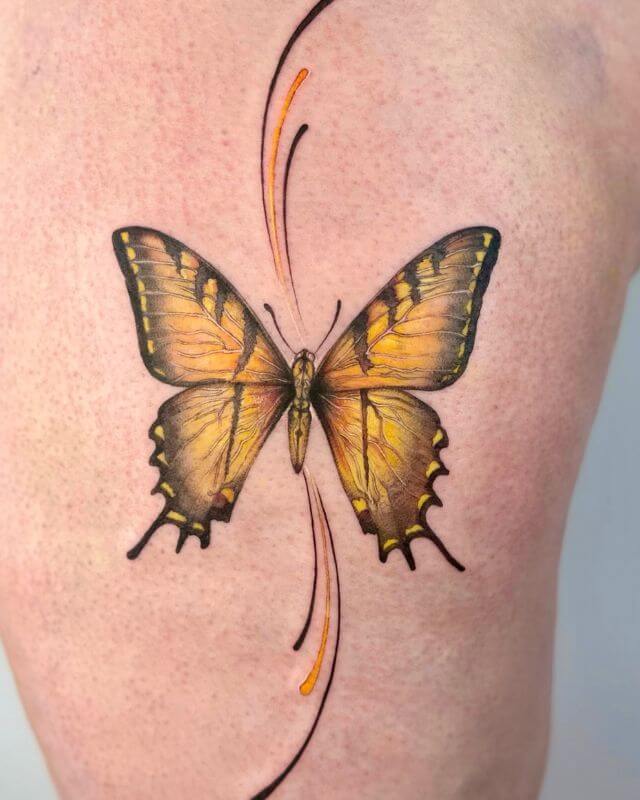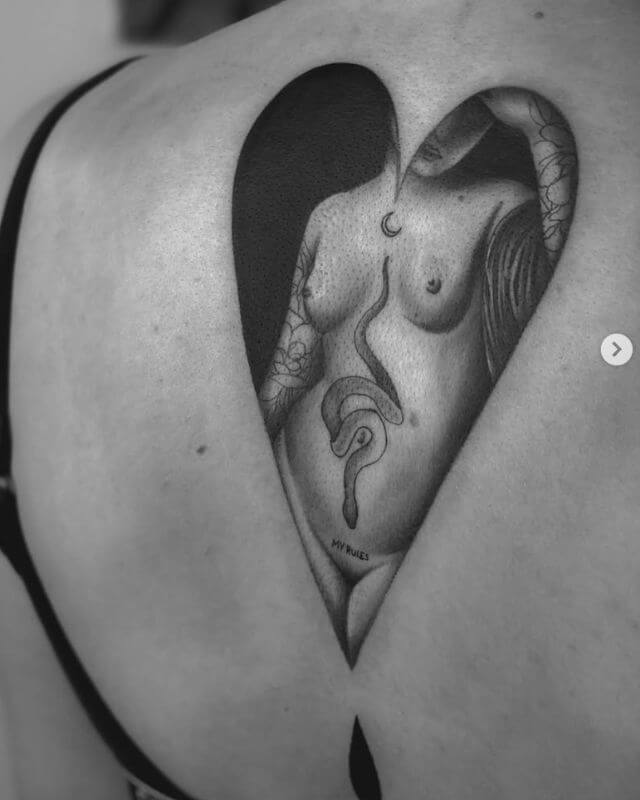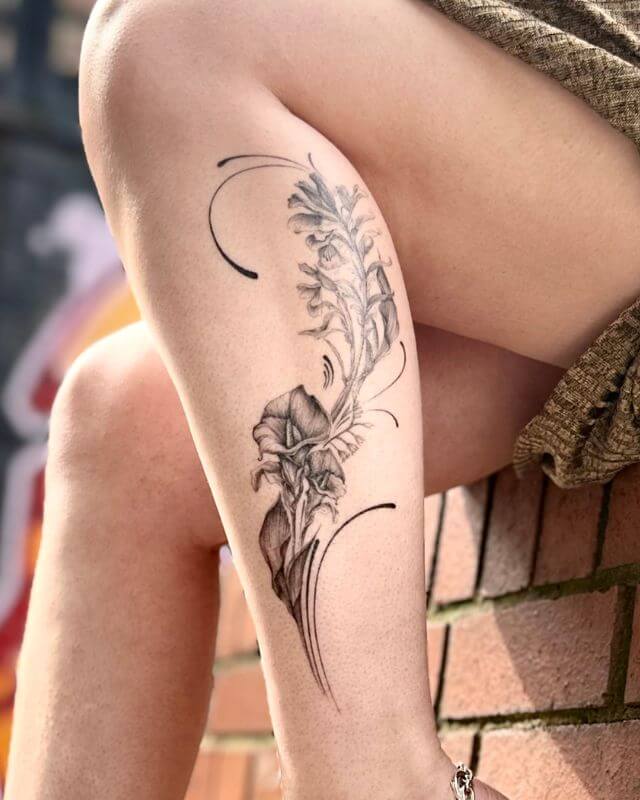
You've been thinking about this tattoo for months. Maybe years. The image in your head is real — you know the feeling of it, the tone of it, the way it should sit on your skin. And then someone asks you to describe it, and everything evaporates.
This is the most common stuck point we see, and it stops people from moving forward far more often than anything else. The blank-page problem. You don't think what you have is good enough to say out loud. So you wait until you've figured it out properly — and the figuring out never quite happens.
Here's the truth: you don't need to have it fully formed. You never did. What you need is a starting point, and you already have one.
Why the blank page happens
People assume that before they contact a studio they need a complete brief. Subject, style, placement, size, colour palette — all decided, all defensible. They imagine the artist expecting something polished, and they don't feel polished, so they don't reach out.
What artists actually want is almost the opposite. A fully formed, closed brief is harder to work with than a genuinely open one. When someone arrives having decided everything already, the artist becomes an executor rather than a collaborator. The best work almost never starts that way.
"The briefs I remember most fondly are the ones that started with almost nothing. A word. A feeling. A single image that meant something personal. Those pieces had room to become something."
What you have — however incomplete it feels — is already more than enough to start a conversation.
Five ways an idea can start
There is no single format for a tattoo brief. Here are five forms we see constantly, all equally valid:
- A subject with no style. "I want something with a moth in it." That's a brief. The style, treatment, composition — that's the conversation.
- A feeling with no subject. "Something that feels like being outside at night in autumn." That's a brief. An artist who works this way will find the imagery that carries that feeling.
- A mood board with no words. A folder of images you've saved over years. No common thread you can articulate, but there's clearly one there. That's a brief.
- A memory or meaning. "My grandmother grew sweet peas every summer and I want something that honours that without being literally a sweet pea." That's a brief. Probably a great one.
- A placement with no image. "I want something on my forearm that I'll still be glad of at 60." That constraint shapes everything — scale, subject, longevity of the style. It's a starting point.
Notice what none of those require: a finished concept, a named style, prior knowledge of tattooing, or certainty about anything. They require only that you've been thinking about something, which you clearly have.
Subject and style are separate things
One of the most useful distinctions in getting unstuck: what it's of and what it looks like are two completely independent questions. You can know one without the other, and that's fine.
Knowing your subject — a heron, a hand, a geometric form — without knowing your style leaves the most interesting creative ground open. The artist brings their perspective on how that subject could live as a tattoo. That's where collaboration happens.
Knowing your style — something fine-line and minimal, something bold and graphic — without knowing your subject is equally useful. It tells the artist the aesthetic territory, and from there the subject often suggests itself.
You don't need both. Either one is a beginning.
References are descriptions
If words aren't your medium, images are. A folder of saved Instagram posts, a Pinterest board you've never shown anyone, a photo from a book — these communicate things that are genuinely difficult to say in language. Colour relationships. Line weight. How detailed or how sparse. The mood of something.
You don't have to agree with everything in your reference images. "I love this but not the colour" and "I like the feel of this but I'd want it simpler" are both useful pieces of information. References give an artist something concrete to respond to, and their response tells you a lot about whether they're the right person for what you have in mind.
What happens when you apply
Our intake form has one question that asks about the idea. It says: "No need for detail. A feeling, a word, an image in your head — whatever's been sitting with you." That's not marketing softening. It's a genuine description of what's useful.
When that answer comes in, we read it — actually read it — and think about which of our artists is best suited to develop it. We reply personally with who we'd suggest, why, and a rough sense of what a session would involve. No templates, no automated responses, no pressure to book immediately.
If what you've written is vague, that's fine. Vague and honest is more useful than precise and uncertain. We've worked from "something dark but delicate" and "I want it to feel like a secret" and done some of the best work of the year from briefs like those.
You've been thinking about this long enough.
Write whatever's in your head. Five questions, two minutes. We'll take it from there and reply personally within 48 hours.
Start Your Application →The one thing that stops people
It isn't not knowing what they want. Most people have a stronger sense of that than they give themselves credit for. It's not having the right words for it — and the belief that the right words are required before they can reach out.
They're not. The conversation is what produces the right words. The artist asks questions, responds to what you've given them, suggests directions — and through that exchange, something that was formless becomes specific. That process is the consultation. It's designed for exactly this.
If you've been sitting on an idea waiting until you can describe it properly: this is the description. This feeling of having something you can't quite articulate yet. That's where the best work starts. Come as you are.