One of the most common questions we get before a booking: "How long will it take?" It's a sensible thing to want to know — you need to arrange your day, maybe book time off, and you don't want to be surprised when a piece you thought would take two hours runs into five. The honest answer is: it depends. But there are enough reliable patterns to give you a genuinely useful guide.
The Short Answer
A small, simple piece (palm-sized, single element, no heavy shading) will typically take one to two hours. A medium piece with real detail and tonal work: three to five hours. A large, fully detailed piece covering a significant area of the body: a full day — anywhere from six to eight hours of tattooing time. Those brackets hold reasonably well across artists and studios, though what follows will complicate them usefully.
By Size
Size is the most obvious variable but it interacts with everything else. Think in terms of canvas area and visual complexity together, not size alone.
- Small (palm-sized, single element): 1–2 hours. A simple botanical, a small script piece, a minimal geometric form. The art here is in the precision, not the coverage.
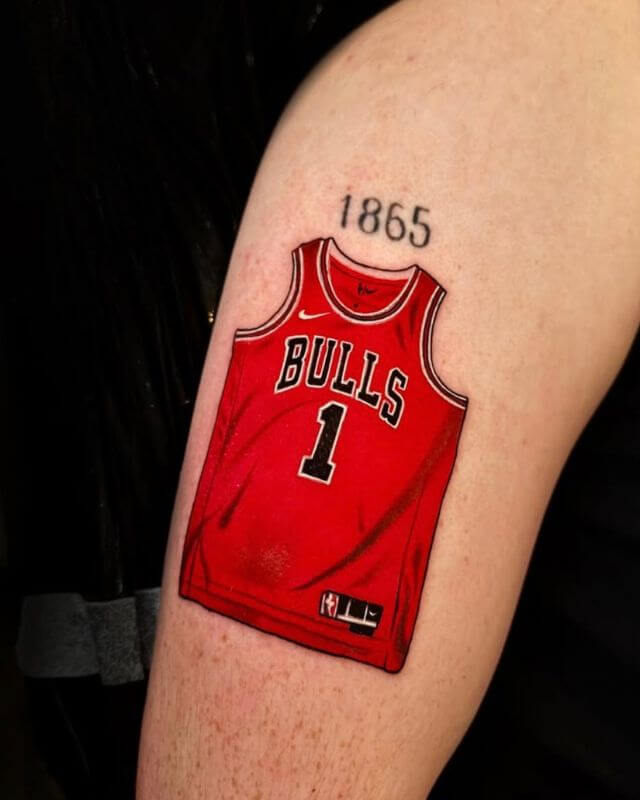
- Medium (A5-ish, detailed): 3–5 hours. A sleeve quarter-section, a detailed portrait on the forearm, a medium floral with shading and depth. This is where most clients land for their first significant piece.
- Large (significant coverage, full detail): 6–8 hours, i.e. a full-day session. Half sleeves, large back panels, substantial thigh pieces with complex imagery. This is work that can't be rushed without compromising quality.
By Style
Style affects time in ways that aren't obvious until you understand how different techniques work.
Fine line is slower per square centimetre than it appears. The precision required — the control of needle depth, the spacing of lines, the consistency of the finest detail — is technically demanding and can't be rushed. Don't let the apparent simplicity fool you: a fine-line botanical that looks delicate on the skin may have taken four or five hours.
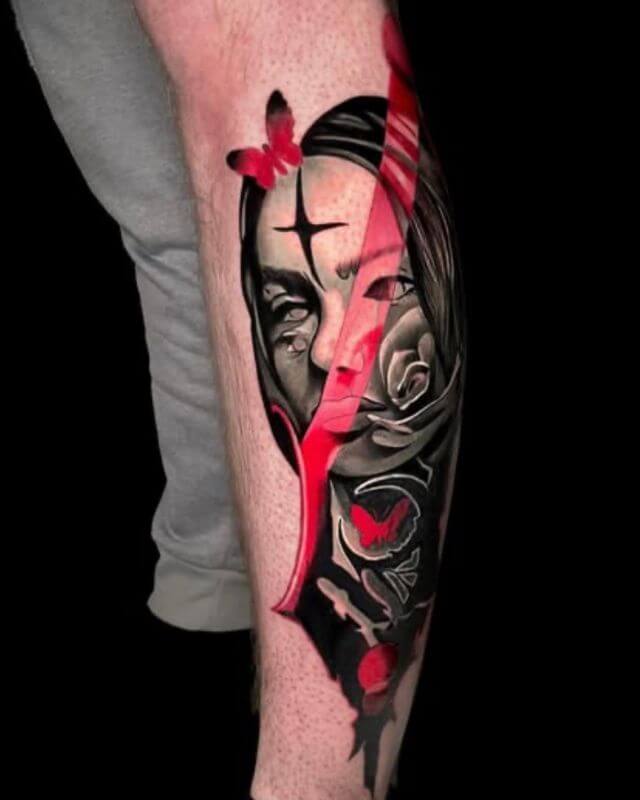
Realism is the most time-intensive style in tattooing. Achieving photographic likeness in skin requires continuous tonal building, layered shading passes, and meticulous blending. A realistic portrait the size of your hand is typically a full-day piece. Larger realism work is often split across multiple sessions.
Bold traditional and blackwork can cover more ground faster. The bold outlines and solid fills of traditional work, or the large-scale black fills of blackwork, are less time-per-area than fine line or realism. But "faster" is relative — a large bold piece is still a significant session.
By Placement
Placement affects session time in two ways: access and movement. Some placements slow an artist down considerably.
- Ribs: The skin moves with every breath, the surface is curved and awkward, and most clients need more breaks here than anywhere else. A rib piece that looks medium-sized can take significantly longer than the same design on a flat forearm.
- Spine: Similar access challenges to ribs — curved, moving, difficult to position consistently. Expect additional time.
- Neck and hands: Small canvases with high movement. Artists have to work in tight, precise sessions. The work itself tends to be smaller, but don't assume short = quick.
- Upper arm, thigh, shoulder blade: The best placements for efficient sessions. Flat, stable, accessible skin means the artist can work consistently without fighting the canvas.
Shorter Sessions vs a Full Day
At Thundercat, sessions run by the hour in half-hour steps, up to five hours, and anything longer is booked as a full day. A shorter session of around four hours — which is the realistic limit for sustained focus on both sides of the process. A full-day session runs approximately six to eight hours of tattooing, spread across the day with natural breaks built in.
We recommend a shorter session for first-timers doing medium pieces. You'll get a sense of your own stamina, the experience won't be overwhelming, and the artist's focus stays sharp throughout.
What Affects Time Beyond the Obvious
A few factors that clients don't always anticipate:
- Stencil placement: Getting the design positioned correctly on your body — checking angles, proportions, symmetry — takes 15 to 30 minutes before the needle touches your skin. It's time well spent, but it's part of the session.
- Touch-up passes: Most sessions end with the artist doing a final pass — checking consistency, adding depth, correcting anything that didn't land perfectly on the first pass. Budget 20–40 minutes for this at the end.
- Breaks: Every 90 to 120 minutes is normal for a short rest. Your body needs it, and so does your artist's focus. A full-day session with three breaks is better for the final result than six straight hours with no pauses.
"Don't plan a dinner reservation immediately after a full-day session. Build in recovery time — you'll want to eat, rest, and let your system settle before the evening."
The most useful thing you can do before enquiring is be specific about what you want and where you want it. That gives the artist enough to quote you honestly, which makes booking the right session length much easier for everyone.