Blackwork is the tattoo style that consistently surprises people. They come in expecting something stark and minimal, and leave understanding it as one of the most diverse — and in many respects most unforgiving — approaches in contemporary tattooing. Getting it right requires genuine technical skill. Getting it wrong is immediately, permanently obvious.
If you're drawn to it, here's what you should actually know before committing.
What Is Blackwork?
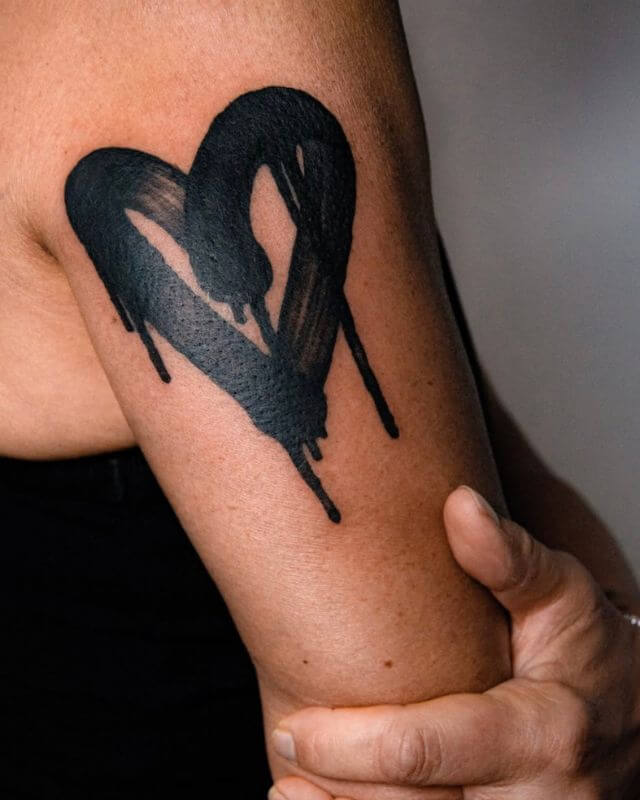
Blackwork is one of the broadest categories in tattooing, unified by a single constraint: black ink only, with no colour. Within that constraint, the range is enormous. Dense geometric fills, bold graphic imagery, tribal-influenced patterns, ornamental florals, abstract architectural compositions — all of these fall under the blackwork umbrella.
What they share is a commitment to contrast. Where other styles use colour or tonal gradients to create depth and visual interest, blackwork relies on the relationship between solid black and bare skin. The negative space is not absence — it's an active compositional element, as deliberate as any line laid down.
This is what makes good blackwork genuinely difficult: the artist cannot rely on colour theory, shading complexity, or painterly blending to rescue a weak composition. The design either works as a graphic statement or it doesn't. There is very little in between.
Blackwork vs Black and Grey vs Linework
These three terms get conflated constantly, and the confusion leads to real problems when clients approach consultations. They're related but meaningfully different:
- Blackwork uses solid black ink with significant filled areas. The defining characteristic is bold, high-contrast application — large areas of black, deliberate negative space, graphic clarity. Gradients are minimal or absent.
- Black and grey uses diluted black ink (or black mixed with white) to create tonal range and realistic depth. It's essentially monochrome realism — portraits, landscapes, textures. Very different visual personality from blackwork despite the shared colour restriction.
- Linework refers to designs built primarily from lines rather than fills. A botanical outline, a geometric mandala, a delicate illustrative piece — these are linework. Some blackwork incorporates linework; not all linework is blackwork.
Knowing which of these three you're actually drawn to matters enormously when finding the right artist, because specialism within tattooing is granular. An artist exceptional at black and grey portraiture may be mediocre at geometric blackwork, and vice versa.
The Spectrum Within Blackwork
Even narrowing to blackwork proper, the internal range is wide. The main categories you'll encounter:
- Geometric blackwork. Precise, mathematical — sacred geometry, mandalas, tessellating patterns. Demands absolute technical accuracy; slight misalignment in repeating patterns is visible immediately. High needle control required.
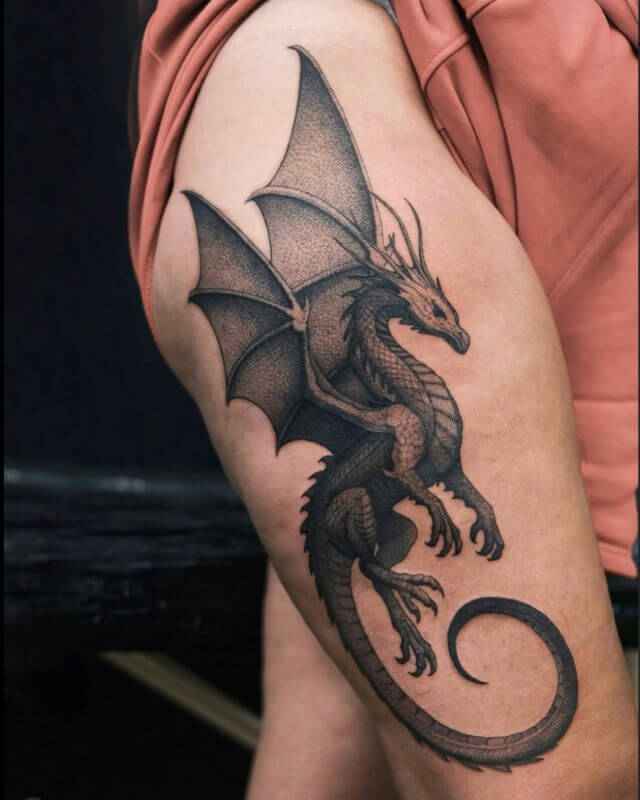
- Illustrative blackwork. Bold graphic imagery — animals, botanical subjects, architectural elements, mythological figures — rendered in confident black with graphic simplicity. The best work here distils a subject to its essential visual statement.
- Neo-tribal and ornamental. Drawing from Polynesian, Maori, and broader tribal traditions but filtered through a contemporary lens. Strong pattern language, body-wrapping compositions, high visual weight.
- Contemporary abstract. Less defined by any lineage — experimental compositions, architectural fragments, pattern work that doesn't fit neatly into the other categories.
How Blackwork Ages
This is where blackwork has a genuine structural advantage over most other styles. The honest answer is that blackwork ages better than almost any other approach in contemporary tattooing.
The reason is straightforward: solid black holds. The carbon-based pigments in black ink are the most UV-stable of any tattoo colour. The graphic clarity that makes blackwork striking at day one is still essentially intact at year twenty. Lines may soften slightly at the edges over decades — skin is living tissue and some migration is inevitable — but the bold fills that define the style remain. There is no colour to fade, no subtle tonal work to blur, no fine detail to lose.
"Bold fills remain. The contrast that makes it striking today is still essentially intact at year twenty. You're choosing a style that was designed to last."
The one caveat: fine line elements within a blackwork piece — if the design incorporates them — will soften over time, just as they would in any other style. The bold fills remain; the hairline details may not. A well-considered blackwork design accounts for this from the beginning, relying on the linework for structure rather than detail.
Who Blackwork Suits
Blackwork is not for everyone. That's not a limitation — it's a strength. The work has a clear personality, and it works best when the person wearing it shares it.
Blackwork tends to suit people who are drawn to strong visual statements, who want their work to remain readable and striking over the long term, and who are comfortable with the permanence and visual weight that comes with significant black coverage. It's not a subtle style. It makes a definitive commitment to the skin.
It also suits people who've thought carefully about longevity. Choosing blackwork is in many respects the lowest-maintenance option: it requires no colour refreshing, ages predictably, and looks intentional at every stage of its life. What you see at day one is a reliable preview of what you'll see at year fifteen.
Placement Considerations
Blackwork is one of the most placement-flexible styles in tattooing. The high-contrast graphic quality reads well at large scale, holds on areas with more skin movement than fine line work would, and the bold visual statement works on most body areas.
It performs particularly well on upper arms, thighs, chest panels, and back pieces — areas with relatively stable skin and the real estate to allow the composition room to breathe. It can work on ribs, though the pain factor and the movement there mean the healing is more demanding. It works less well on the very fine-detail end when applied to high-flexion areas like fingers and feet — not because the fills won't hold, but because any fine line elements within the design will soften faster.
Scale matters more in blackwork than in many other styles. A piece that relies on the tension between bold black and negative space needs enough area to establish that tension. Shrinking a complex blackwork composition into a small area typically collapses the visual logic. Come to the conversation with a realistic sense of the space you're willing to commit.