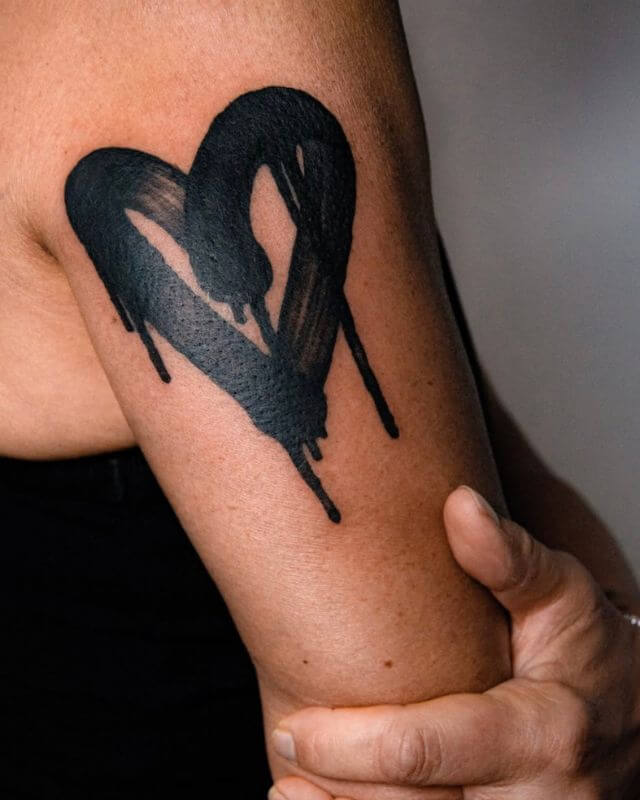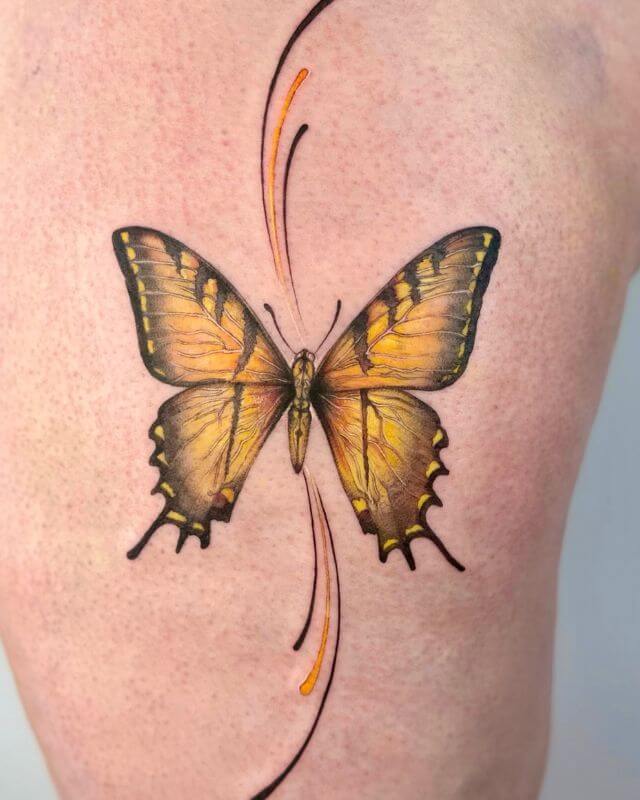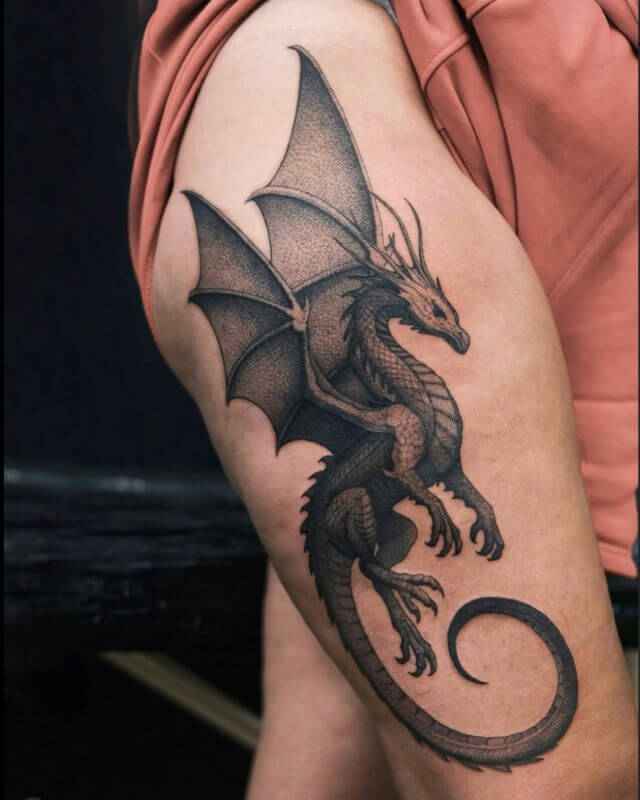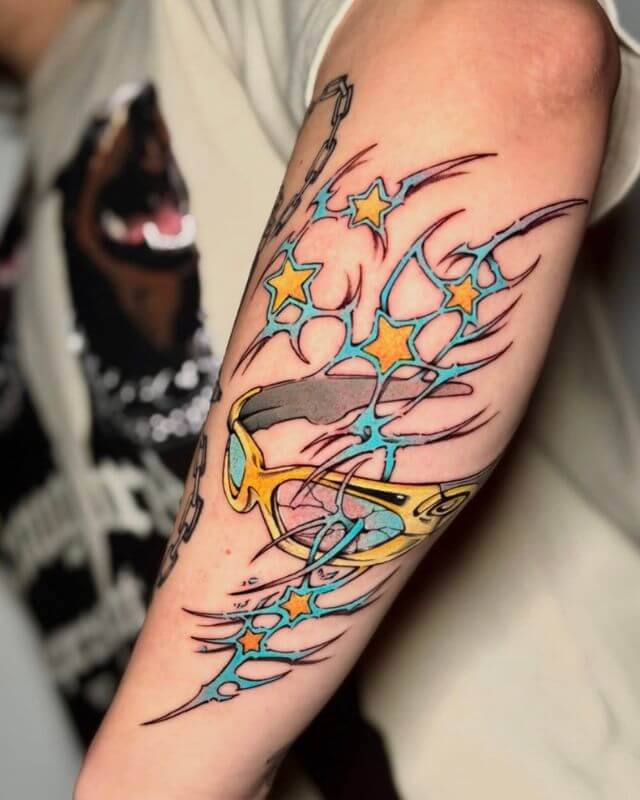
Neo-traditional is one of the most commonly requested styles at Thundercat, and also one of the most commonly misunderstood. People know they like the look — bold, rich, illustrated — but often can't articulate precisely what makes it what it is, or what distinguishes exceptional neo-trad from work that merely resembles it. That distinction matters, because neo-traditional done poorly is one of the more difficult styles to rescue.
The Roots of Traditional Tattooing
To understand neo-traditional, you need a working knowledge of its parent style. American traditional tattooing — the kind you see on sailor iconography, the kind associated with Norman Collins (Sailor Jerry) and the early American tattoo trade — dominated Western tattooing from roughly the 1920s through to the 1970s.
Its visual grammar was highly deliberate: thick black outlines, a restricted colour palette (red, green, yellow, blue, black), iconic imagery drawn from maritime, military, and folk traditions — roses, eagles, daggers, anchors, panthers, hearts. The boldness wasn't aesthetic preference alone. It was functional. These tattoos needed to remain legible on aging, weathered skin. On sailors who worked outside. On people who might spend thirty years before anyone looked at the work again. The bold outline and flat colour were engineering decisions as much as artistic ones.
Traditional's longevity test — does this still read clearly at fifty years on skin that's lived a full life? — is one of the most rigorous in tattooing. Most styles fail it. Traditional was specifically designed to pass it.
What Makes It Neo-Traditional
The neo- prefix signals a revision, not a rejection. Neo-traditional takes the structural commitments of American traditional — strong outlines, bold colour, legibility at distance and over time — and expands the vocabulary substantially.
What changes: subject matter opens up beyond the traditional iconographic vocabulary. The colour palette expands, with more complex colour theory, richer gradients, and a wider range of tones. The rendering becomes more detailed and expressive within the outline structure. The imagery can be more contemporary, more personal, more ambitious in scope.
What stays: the foundational principle that the work should be bold, structurally sound, and readable in twenty years. The outline remains the skeleton of the composition. The commitment to graphic legibility remains. Neo-traditional artists who lose that grounding — who sacrifice the structure for decorative complexity — typically produce work that looks impressive at the healed-week-four mark and ambiguous at year ten.
Subject Matter and Symbolism
Neo-traditional thrives with subject matter that has inherent visual weight and symbolic resonance. The style's combination of bold outline and expressive colour is ideally suited to:
- The natural world. Florals (roses, peonies, botanicals), fauna (owls, wolves, foxes, big cats), and natural landscapes all translate beautifully. The outline gives organic forms a graphic confidence they don't have in more painterly styles.
- Animal portraiture. Neo-trad is particularly strong for animals — the bold outline captures the essential character of a subject in a way that naturalistic realism sometimes doesn't.
- Mythology and folklore. Deities, creatures, archetypes — the heightened nature of the subject matter suits the heightened visual language of the style.
- Architectural and ornamental elements. Frames, botanical borders, structured compositional elements — neo-trad handles these with a confidence that makes them feel intentional rather than decorative filler.
How Neo-Trad Ages
Neo-traditional ages exceptionally well — better, in most cases, than any other style that incorporates significant colour work. The reason comes back to its roots in American traditional: the structural principle of legibility over time is baked into the style's DNA.
Bold outlines hold their shape. Bold colour — applied with the density that neo-trad demands — fades more gracefully than thin or gradient-heavy colour application. The work softens over decades rather than deteriorating. A well-executed neo-traditional piece at year fifteen tends to look like a slightly more relaxed version of itself at year one. This is the ideal aging trajectory for tattooing.
The one watch-out: neo-trad that has been executed with excessive fine detail in the interior of the design — attempting to cram in the kind of rendering that belongs in a different style — tends to lose that detail faster. The outline structure remains; the interior work may blur. This is an artist execution issue rather than a style issue, but it's worth understanding when evaluating portfolios.
Finding the Right Artist
Neo-traditional is deceptively demanding. It looks approachable — it doesn't have the technical mystique of Japanese irezumi or the obsessive precision requirements of geometric blackwork — but the bar for genuinely good work is high, and the gap between good and mediocre is very visible.
Bad neo-trad has specific failure modes that are worth knowing how to spot. Cluttered compositions that don't resolve into a clear read at distance. Colour that's ambitious in range but muddied in application — too many tones fighting each other. Subjects that look like reference photos traced onto skin rather than interpreted through the visual language of the style. Outlines that are inconsistent in weight, losing the structural confidence that holds the whole thing together.
When evaluating an artist's portfolio for neo-traditional work, look at the composition first. Does each piece have a clear focal point? Does the viewer's eye move through the work or get lost in it? Then look at the colour. Is it rich and intentional, or decorative and busy? Then look at the healed work. Good neo-trad at three years is still bold, still clear, still wearing the artist's intention. Average neo-trad at three years looks vague.
At Thundercat we host neo-trad specialists who have worked specifically within this style for years. If it's the direction you're moving in, it's worth taking the time to find someone whose portfolio makes you certain rather than someone who does a bit of everything and can approximate the style on request.