Most tattoo regret isn't about the tattoo itself. It's about the decision that led to it — rushed, poorly researched, made under the wrong kind of pressure. The people who love their tattoos in twenty years almost always made the same five decisions correctly. The people who don't — missed at least one.
This guide isn't about style trends or flash sales. It's about the quiet internal questions that separate a tattoo you'll reach for stories about from one you'll quietly stop showing people. We see both kinds of outcomes every week at Thundercat. Here's what separates them.
Why Most Tattoo Regret Is Predictable
The tattoo removal industry is worth over £3 billion globally. That's a lot of second thoughts. But when you look closely at the patterns — what people are removing, and why — the same errors keep appearing.
Impulse placement. A style chosen for trend rather than personal resonance. An artist picked on price rather than specialism. A design that looked good on screen but wasn't considered on the body. The regret isn't really about the tattoo. It's about the conditions in which the decision was made.
"We've never had a client regret a tattoo they genuinely sat with. We've had plenty regret the ones they rushed because they were scared to seem indecisive."
The good news is that regret is almost always avoidable. It just requires asking five honest questions before you book anything.
Question 1 — Why do you want this?
This sounds obvious. It isn't. "Because I like it" is not an answer — it's where the question starts.
The strongest tattoos — the ones that remain meaningful years later — have a reason beneath the aesthetic. Not necessarily a profound one. But a real one. Some examples of real reasons:
- This symbol marked a period of my life I want to carry permanently
- This image has appeared in my notes and boards for three or more years without fading
- This is connected to something I love that I can't imagine not loving
- This is purely aesthetic — but I'm getting it on a low-visibility placement deliberately
Not-real reasons tend to look like: you just saw it on someone else, it's trending right now, your friend has a similar one, or you want to commemorate something you're still in the middle of emotionally processing.
There's no judgment in any of this. But the question is worth sitting with. If you can articulate a solid answer in six months, it'll still feel solid in six years.
Question 2 — Where on your body?
Placement is permanently underestimated by first-timers. Where a tattoo lives changes everything: how it ages, how it behaves with the body's natural contours, how visible it is across different stages of your life, how easy it is to expand or build around later.
Certain placements age more gracefully than others. Flatter, more stable skin (upper arm, thigh, shoulder blade, upper chest) holds detail far better over decades than high-movement areas (inner elbow, back of knee, finger, foot). Fine-line work on a finger will typically need touching up within five years. The same design on a forearm will last considerably longer.
Visibility matters too — but not in the way people typically frame it. The real question isn't "can my employer see it?" but "do I want this to be a conversation starter with strangers?" Some people love that. Others find it tiring quickly.
Question 3 — What style, and does it match your life?
Tattooing is now genuinely diverse as a medium. Fine line, neo-traditional, blackwork, realism, Japanese, cyber sigilism, watercolour, geometric, illustrative — each has different longevity characteristics, different aging properties, and works best on different people and placements.
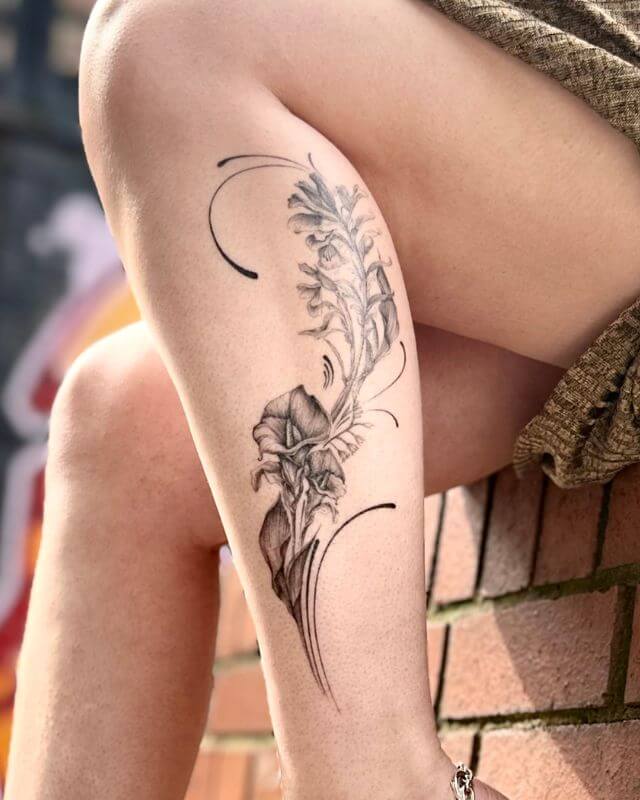
The most common mismatch we see: someone with a bold, expressive personal style who's drawn to ultra-delicate fine line because it feels "safe" and less permanent-seeming. Fine line can be extraordinary. But it's arguably the most demanding style to maintain, tends to blur more with age, and often reads as less significant on larger body areas.
A few useful style-matching questions:
- Is this style consistent with the other visual things I'm drawn to — the art I buy, the clothes I wear, the interiors I like?
- Have I looked at this style on healed skin, not just fresh tattoos? (Fresh work always looks better.)
- Am I drawn to this because I genuinely connect with it, or because it feels less risky?
- Does this style suit the placement I have in mind?
- Is the artist I'm considering genuinely a specialist in this style, or do they do a bit of everything?
Not sure which style suits you?
A 15-minute consultation with one of our artists can save you months of second-guessing. We'll look at your references, talk through styles, and give you an honest opinion — no obligation until you love the direction.
Book a Free Consultation →Question 4 — Who do you trust to execute it?
This is the one that matters most and gets evaluated least carefully. The tattoo is only as good as the person holding the machine.
The market is saturated. There are extraordinary artists and there are people who learned from YouTube two years ago, both with the same title of "tattoo artist." The difference shows on the skin, and it shows permanently.
What to look for — beyond the obvious (portfolio quality, hygiene standards, experience):
- Style specialism. The best artists don't do everything. They do their thing exceptionally well. An artist who claims to do every style is almost certainly average across all of them.
- Healed work. Ask to see healed examples. Fresh tattoos look better than they are. Healed work reveals what the artist actually produces once your skin's job is done.
- Communication quality. Does the consultation feel like a genuine creative conversation, or like processing a transaction? The best artists are curious about you and your reasons. That curiosity translates into better work.
- Honesty about fit. The best artists will tell you if your idea isn't right for the placement or won't age well in a particular style. This feels uncomfortable but it's a green flag, not a red one.
At Thundercat we host 30+ guest artists per year — specialists across every style we offer. One of the reasons we operate by consultation rather than walk-in is that it allows us to match clients to the right artist rather than whoever is next free. That matching is often the single biggest factor in final result quality.
Question 5 — Can you live with it changing?
Your body will change. The tattoo will change. That's not a reason not to get tattooed — it's a variable to design around.
The people who remain most satisfied with their tattoos tend to choose designs that either: (a) have enough visual weight to age with dignity — bold lines hold better than hair-thin detail; or (b) are placed where the skin doesn't stretch significantly over time.
They also tend to hold the tattoo lightly rather than treating it as something that must remain exactly as placed on day one. Tattoos evolve. They can be added to. They can become part of a larger piece. Some of the most stunning work we do is building around someone's existing tattoo from a decade ago, taking something they'd half-forgotten about and turning it into something they're proud to show.
The Simple Filter Test
If you're still undecided after working through these five questions, apply this last test. It's not ours — it's something a client told us after her second tattoo. She'd regretted her first and was determined not to repeat it.
"I put the reference image somewhere I'd see it every day for sixty days. Not on my phone — somewhere physical. If I still wanted it on day sixty, it was real."
Sixty days. If the idea still feels as certain or more certain on day sixty than it did on day one — that's not impulse. That's preference. And preference tends to age well.
The best tattoo studios — the ones that produce work people love for decades — share one thing in common: they slow the process down enough for the client to be certain. Not to generate friction. Because they've seen what happens when people aren't.
We built our consultation process around that principle. It takes two minutes to start. You'll get a personal reply the same day. And nothing moves forward until the design is something you genuinely love.