Fine line tattooing has become one of the most requested styles at studios everywhere. Part of the appeal is obvious — the work can be extraordinarily delicate and beautiful. But fine line is also one of the most misunderstood styles in terms of what it demands technically, how it ages, and what makes the difference between a piece that holds up and one that doesn't.
If you're considering fine line, this guide covers everything honestly — including the parts studios sometimes leave out.
What Is Fine Line Tattooing?
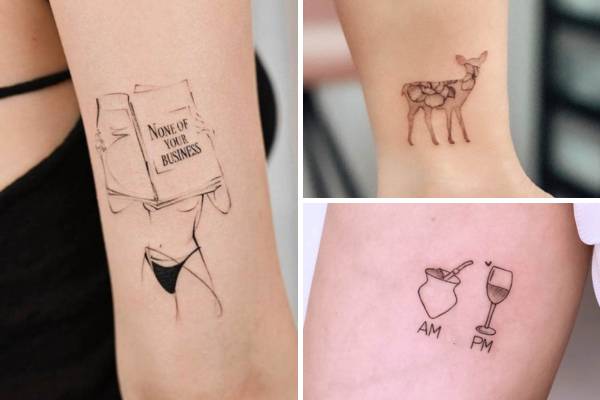
Fine line tattooing uses single needles or very small needle groupings to create designs with minimal line weight. The result is a tattoo that can appear almost drawn rather than inked — delicate, precise, often incorporating negative space and stippled shading rather than solid fills. At its best, fine line work has an ethereal quality that no other tattoo style can replicate.
It encompasses a range of sub-styles: pure linework, illustrative fine line, fine line with dotwork shading, botanical and floral pieces, ornamental and geometric designs, and ultra-minimalist single-line compositions. What they share is the demand for exceptional precision and the absence of the visual weight that comes from thick lines or heavy fills.
How It Differs Technically
Fine line requires a different skill set to bold or traditional tattooing — not harder, exactly, but more demanding in specific ways. With a bold design, a minor inconsistency in pressure or hand speed can be absorbed by line weight. With fine line, there's nowhere to hide.
Needle depth is critical. The needles need to deposit ink at a precise depth in the skin. Too shallow and the ink won't hold — it'll fade or fall out of the skin during healing. Too deep and you risk blowout, where ink spreads beneath the intended line and the crisp mark becomes a blur. The margin is small, and it demands a settled, confident hand.
Hand speed matters. A slower hand speed allows more ink to deposit in each area. For fine line, the artist typically works faster to maintain consistent, minimal marks. Inconsistent hand speed creates inconsistent line weights — some sections thin, others slightly thicker — which reads as instability in the finished piece.
Starts and stops are diagnostic. Look at the ends of lines in any fine line portfolio. Clean, sharp starts and stops — where the line begins and ends crisply without wobble or bleed — are a sign of technical control. Fuzzy or uneven line ends are a sign of the opposite.
How Fine Line Ages
This is the conversation many clients don't have before booking, and it's the most important one. Fine line has a shorter "pristine" window than bold work. This isn't a flaw in the style — it's a physical reality about how thin lines behave in skin over time.
Skin changes. It loses elasticity, shifts with weight changes, and is exposed to UV over years. Fine lines, lacking the mass to hold their shape under these conditions as robustly as thick lines, will soften and blur. A fine line piece that looks razor-sharp on day one will typically look softer within five to ten years. The finest, most delicate elements — hair-thin lines, intricate detail at very small scales — are often the first to show softening.
"Fine line in its second decade can still be genuinely beautiful — it just looks different. Knowing that going in means you're choosing the style with full information, not getting a surprise."
This doesn't mean fine line is a bad choice. It means it's a choice to be made consciously. A well-executed fine line piece from a skilled artist, on a good placement, cared for properly, can remain striking for many years — and even as the finest details soften, the composition often holds its integrity and elegance.
Best Placements for Fine Line
Placement is where a lot of fine line choices go wrong. The style requires skin that is relatively stable — flat, low-movement areas that don't stretch or wrinkle significantly over time.
- Outer upper arm and forearm. Good skin stability, easy access for the artist, and areas that don't experience dramatic fat redistribution or wrinkling over time. Among the best placements for any fine line work.
- Thigh (outer and front). Large, stable surface area. Works well for bigger fine line compositions.
- Shoulder blade and upper back. Relatively stable, holds detail well. Bear in mind that larger back pieces are harder to see and care for yourself.
- Ribs. If you can tolerate the discomfort — and it is one of the more painful placements — the ribcage offers excellent skin quality for fine line. The skin lies over bone, which means less fat migration over time.
- Upper chest (below the collarbone). Works well for smaller, symmetrical fine line pieces. Medium stability.
Worst Placements for Fine Line
These placements are popular on social media. They look stunning when fresh. They age poorly, often significantly within two to three years.
- Fingers and hands. The skin on fingers is thin, constantly moving, and subject to extreme friction. Finger tattoos notoriously fade and blur faster than any other placement — fine line on fingers often looks indistinct within eighteen months. Touch-ups can help but cannot fully counter the placement's inherent challenges.
- Feet and ankles. Similar issues: thin skin, constant movement, friction from footwear. Healing is also more difficult in this area.
- Inner wrist. High-movement area with relatively thin skin. Fine line here fades faster than the outer arm or forearm.
- Décolletage and neck. Skin in these areas changes significantly with age. UV exposure is also high on the neck, which accelerates fade.
- Back of the knee and inner elbow. Crease placements are notoriously difficult for any style, but especially for fine line where the folding and stretching of skin disrupts the lines.
Choosing the Right Artist
Artist selection matters for every style. For fine line, it is the single most important variable in the outcome — more than design, more than placement, more than aftercare. The difference between an expert fine line artist and a generalist who does fine line occasionally is visible immediately and it's visible permanently.
What to look for:
- Healed examples, not just fresh. Request them specifically. Fresh fine line work always looks clean. Healed work reveals whether the artist's depth control is actually consistent — whether lines have held, whether there's minimal fallout, whether the finest elements survived.
- Consistent line weights throughout. In a portfolio piece, the lines should be uniform in weight from start to finish. Variable weights suggest inconsistent pressure or hand speed.
- Clean starts and stops. The ends of lines should be sharp and deliberate. Wobble at line ends indicates a lack of fine motor control at the critical moment of starting and stopping the machine.
- Work two or more years old. Ask if they have examples of work done two or more years ago. Seeing how their work holds over time is far more informative than seeing what they produced last month.
- Style specialism. The finest fine line artists are specialists. They've put serious time into this style specifically. Be cautious of portfolios that show a very wide range of styles at an even level — genuine specialisation shows in the portfolio.
Fine line tattooing done well is genuinely extraordinary — one of the most compelling things the medium can produce. Done by the wrong hands, it's a soft blur within a few years. The difference is the artist. Take time on that decision.